Dec 292009

We’re in the midst of terrible winter blues here. Short days, freezing weather, perpetual rain and gloom – this really is the climate of the British Isles at its worst and we could well have to wait two months for it to break and for signs of spring to appear. It hardly bothers to get light before dusk is falling again. We are perpetually tired, hugely demoralised and demotivated, as well as being prone to eating heroic quantities of starchy foods and leaving every light in the house on in a desperate attempt to keep ourselves awake and functional.

This latest bout has been kicked off by our return from rather a nice winter break in the West Country that included sunshine, milder weather and longer days than we seem to be experiencing on the eastern side of the UK. Now, it is said the best way to get over the return from a pleasant holiday is to plan the next. And, given the walking theme of this blog, what should we be attempting come springtime?

Well, to start with, a big priority has to be to finish off the South West Coast Path. Having got as far as Kingswear (just a ferry crossing from Dartmouth and terminus to a short but lovely steam railway) we now need to cover just 150 of the entire 630 miles to earn our completion certificate. Trouble is, the next stage is a sod to organise, running as it does through one of the densest and most popular holiday areas on the path.

This makes accommodation very awkward and not necessarily all that satisfactory when you do find somewhere prepared to let rooms for just one night – we have already had severe problems around here with a pre-paid booking being arbitrarily cancelled while we were on the path and unable to do much about finding an alternative, simply because the B&B landlady had a better offer. And that’s without the river valleys, each presenting its own challenge in route-finding, timing, possession of the correct change or even on occasion wading. It might sound like a small thing but factor in several, as you often need to do in south Devon, and it does add up.

Our circumstances have changed hugely since we set out – we live further away from the south-west and one of us has experienced some major orthopaedic problems including unsuccessful surgery that called into doubt whether we would be able to continue. Although a combination of osteopath, acupuncturist and remedial programme at the gym have reduced that problem in a way we dared not hope would be possible. So the time is ripe for us to tackle the hoteliers of Torbay (and there was a reason that Fawlty Towers was set there, make no mistake about it) along with the rivers Dart, Teign and Exe and the Lulworth Army Ranges. With so much invested in completing this walk, it is definitely time for us to press on and finish it. And then it will be the Two Moors Way, but that is a blog post for another time.

We also have a long-term engagement with Northumbria, as a precursor to walking the Hadrian’s Wall Path. This is not an area of the country we are at all familiar with. There are few things in life we find more interesting than Roman archaeology so, in order to make this walk a success, we are going to have to visit the major sites in advance and minimise the available distractions. This area has reputedly some of the best walking in the country, so we are going to have to spend a decent amount of time up there – even more important when you have a round trip of 600 miles or so to make when visiting. It is one of the country’s better-organised National Trails, with public transport and accommodation guides available, so it should be a pleasure to do.

South Wales has also been mentioned as a possible destination – clearly brought on by all those views across the Bristol Channel. On top of the Brecon Beacons, the Pembrokeshire Coast Path, scenic railways and as many castles as the heart could desire there is the chance to visit Doctor Who filming locations including Southerndown Beach (or Bad Wolf Bay as you might recall it). The fact that an episode of Merlin was also filmed there really seals the deal.

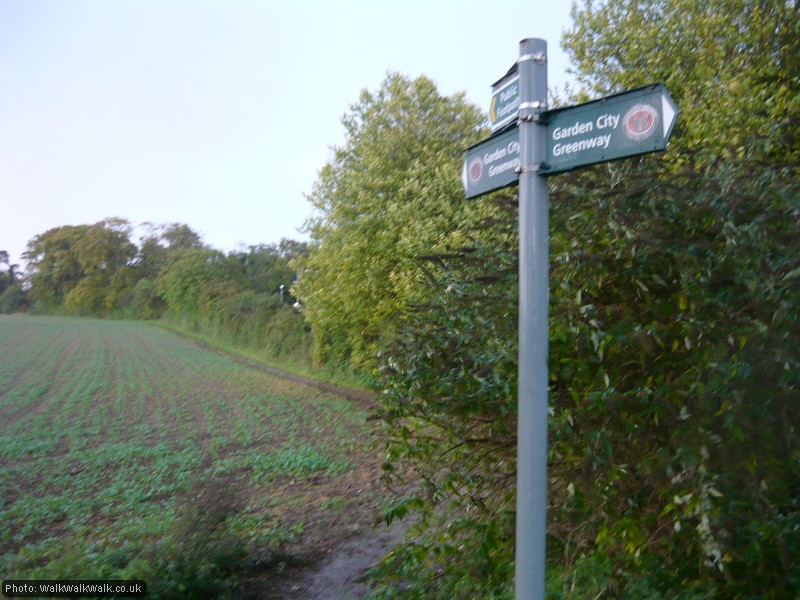
We now live closer than ever to the start of Norfolk’s Peddars Way and, having walked the North Norfolk Coast Path twice now, it would be really nice to have completed its sister path. Trouble is, this is another slightly awkward one to organise with a start point that is not served by any known public transport and irregularly-spaced, rare accommodation opportunities along the route. On the other hand it is flat, relatively local and straight.

Decisions, decisions… we’re feeling better already.

Posted by admin at 10:24 pm Tagged with: , , , , , , , , ,
Dec 292009

Thoroughly fed up with the snow, the cold and the grey skies in the east of England, we fled west. A four-day break on Exmoor has given us an abundance of clear blue skies, mild weather and sunshine before we had to return home to the cold and damp and the refrozen slush on the verges.

Early-morning snow in Lambourn Woods

Early-morning snow in Lambourn Woods

On the way down we stopped off at a couple of interesting places – Lambourn Woods, just in Berkshire but really at the junction of three counties, was a great place to slip off the motorway for a morning stroll among snow and mist. Also around Ashdown, just about in Oxfordshire, which has a number of interesting features including a field of undisturbed Sarsen Stones, an unusual Restoration hunting lodge and a hillfort. Our motivation was, of course, the caching opportunities presented by the confluence of three counties.

On arrival in Somerset, based in one of the villages on the eastern edge of the moor, we were able to walk extensively in the area, although short days meant sunset always approached much sooner than was entirely convenient. On the best days we enjoyed warm, sunny mornings with early mist burning off the hills and the smell of pine in the air.

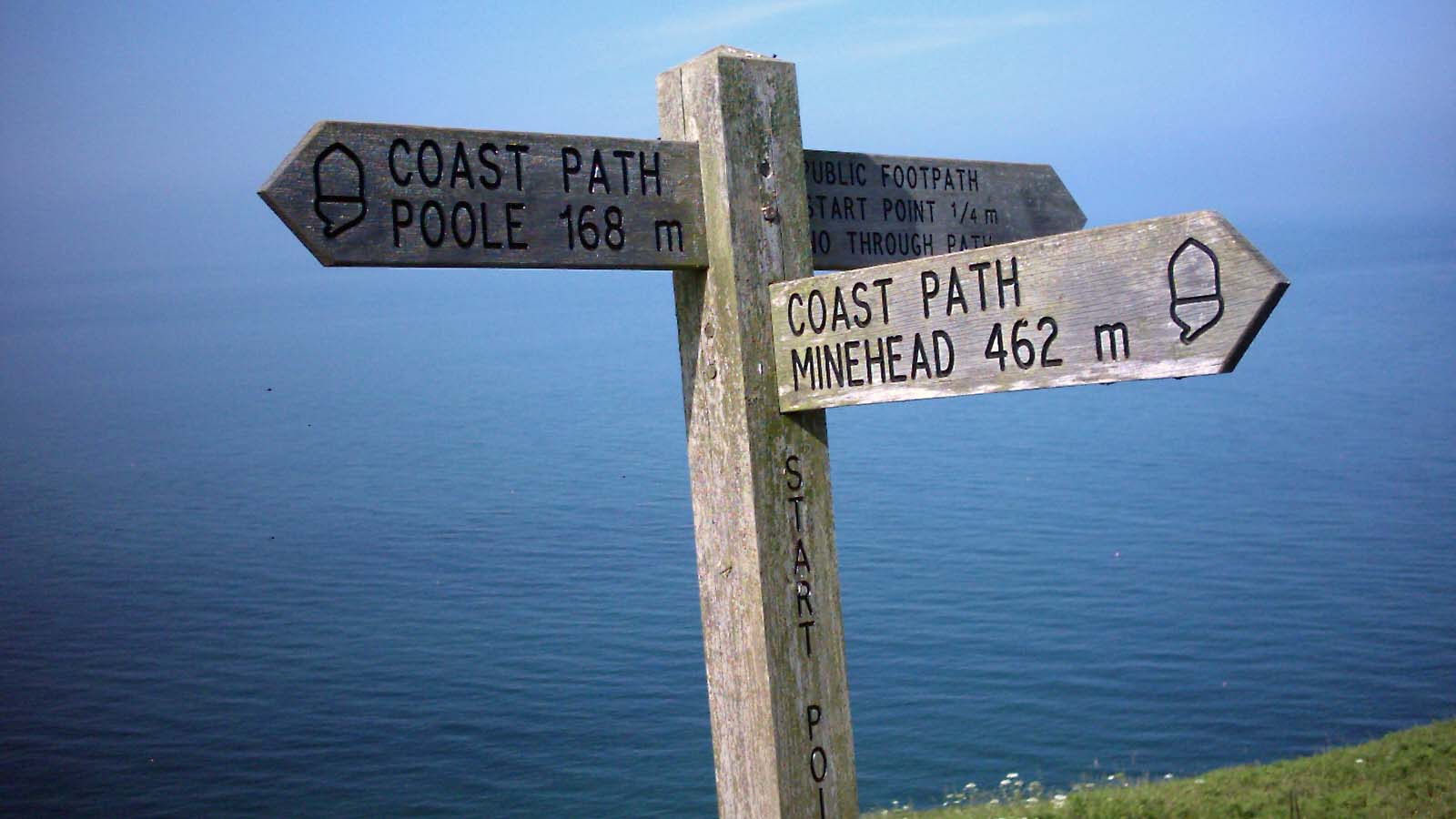
The National Trust’s Holnicote estate has miles and miles of walks which largely cover Exmoor’s North Hill – the five-mile range running between Minehead and Bossington Hill before the land dives down to sea level for the Vale of Porlock. Scenery ranges from deciduous woodland and stream-filled combes to bare hilltops with views over miles and miles of moorland. Since these ran literally past the doorstep, we took full advantage. On Christmas day we met a large guided group of senior citizens taking in the view from Selworthy Beacon. Staying at a local hotel they were, like us, busy escaping the demands of Christmas – and the cold.

A viewpoint high above the Vale of Porlock

A viewpoint high above the Vale of Porlock

Highlights for walking here include Selworthy Beacon, Bossington Hill and Hurlstone Combe, an area that is accessible and unbeatable for views but also quite demanding in terms of the climbs and descents you will encounter. One local feature to see is the stone memorial hut for walkers just below the beacon, built in 1879 in memory of Sir Thomas Dyke Acland, 10th Baronet. (A descendant subsequently donated the estate to the National Trust, which is how we come to be walking over it today.) It always raises a smile, for this sturdy stone structure is a definition of ‘hut’ that you will not often see.

A trek up to Dunkery Beacon, Exmoor’s highest point, is always worthwhile. There are car parks at different locations around it, meaning you can make the walk as easy or challenging as you like. It’s a wonderfully bleak spot with views for miles, as you would expect. In fact, looking across to North Hill, it can sometimes be quite difficult to remember that there is a valley below with a major road and a number of settlements, all out of sight from this eminence. Like Selworthy Beacon this can be a popular spot but choose your moment well and you will feel like the only soul in the world.

The shingle beach at Porlock Weir is close to a submerged forest

The shingle beach at Porlock Weir is close to a submerged forest

We’re extremely familiar with the coast path in this area and any section of it that runs through the Exmoor National Park can provide excellent walking – easy in some areas, demanding in others, but always with spectacular views and access to places you simply would not discover otherwise. We visited an area where things have changed a little since we came through on the first stage of our long-distance coastal walk in 1997. Then the Porlock Shingle Ridge, which kept the sea out of the low-lying area behind, had not been breached by the sea. Now it has, uncovering a rubbish dump in th eprocess, and the area is a saltmarsh, a nature reserve and a Site of Special Scientific Interest. The beach at picturesque Porlock Weir is also an interesting feature, being the site of a submerged forest dating back to mesolithic times and sunk by rising sea levels following the end of an Ice Age.

On the day of our visit the skies above the village were slate grey, with great clouds rolling off the high moorland above and out to sea. The wooded slopes of the towering hills above looked dark and forbidding and there was a fierce wind. Part of the price you pay for a December visit, and an enchanting smell of burning wood suggested many residents were keeping to their cosy cottage interiors, drinking tea beside an open log fire.

This WSR train is returning to Minehead

This WSR train is returning to Minehead

We also learned about one very welcome development since we were last here – the link to the South West Coast Path eastwards from Minehead, on a route known as the West Somerset Coast Path. This is great, even though it destroys our bragging rights and means we will need to return to walk this new section of path running for 25 miles between Kilve in the Quantocks and Minehead. We briefly encountered sections at Dunster Beach to Blue Anchor and in Watchet and heartily look forward to coming back to do it properly. The highlight of this day was seeing the steam trains running up and down the stretch of the West Somerset Railway that runs along that section of coast, including a close encounter at Blue Anchor station that proved popular with everyone nearby.

All too soon it was time to return home. There had been a plan afoot to visit the gardens at Dunster Castle – famously terraced, subtropical and featuring a national collection of strawberry plants. But it came to us that, really we had squeezed the most we could out of this visit and that December was hardly the ideal time, with the castle itself also closed. So instead we drove back through what felt like several climate zones to resume work and everyday life, and wished heartily that we didn’t have to.

Exmoor links

Photo gallery

Posted by admin at 7:25 pm Tagged with: , , , , , ,
Dec 122009

People who are interested in astronomy and the night sky are in for a treat in the next day or two as the Geminid meteor shower passes overhead on December 13-14.

To be found in the constellation of Gemini, hence the name, it is thought to be caused by the remains of an extinct comet and has only been visible for the last 150 years or so – an infant in astronomical terms. It is also thought to be growing more intense as the years pass.

We read that in 2009 the peak date occurs two days before a new moon, making for ideal viewing conditions, so this really is an occasion not to be missed.

This is a great excuse for a night walk, since you need to be away from urban and suburban streetlighting to really enjoy the show. Night is a wonderful time to be out and about in the countryside, listening to wildlife darting about woods and hedgerows, as long as you exercise a bit of common sense and care.

For example, making sure you don’t fall into the nearest ditch, or scare householders near footpaths into thinking you’re a burglar. But, in these days of obsessive caution about everything, it can be deeply refreshing.

You also hear a fair bit of activity with shotguns on occasion, but that’s a whole different story that has nothing to do with astronomy.

To learn more about the Geminids and how to see them, visit their Wikipedia page with timing information for those hoping to catch them in the UK available here.

Plus, you can pick up some viewing tips here and here. Happy stargazing.

Posted by admin at 11:56 pm Tagged with: ,
Dec 122009

Geocaching is catching on again around here. It’s an activity we have a love-hate relationship with – sometimes we want to do nothing but, sometimes it drives us mad, sometimes we desperately want to avoid it and all who sail in it. (For those unsure what caching means in this context, follow this link.)

We’ve just had our longest period ever without finding a cache – a staggering 89 days between August and November this year – and it really did look as if this time the shine had come off to such an extent that we would find that we’d stopped without ever making a deliberate decision to do so. Our figures on previous years are very low – in 2008 we found more than 250 and this year we haven’t made 50 yet.

But the break has meant that a few decent local caches have appeared, and we have a short holiday coming up that takes us to a part of the country we’re very fond of and which has a cache we’ve been trying, unsuccessfully, to find for quite a while. Wouldn’t it be nice, we thought, if that one could be a landmark number. And our journey down will take us through a couple of counties that are still blank spaces on the map – no finds there at all.

Maybe this time we can find a happy medium between obsession and the inevitable disgust that follows. Maybe.

Posted by admin at 11:18 pm Tagged with:
Nov 252009

Yesterday we visited a corner of the country that’s not often been on our itinerary – Fenland. The reason: to take a look at one of Britain’s most unusual hillforts, Stonea Camp.

Drainage ditches mark out field boundaries

Drainage ditches mark out field boundaries

You might expect, given that it’s a hillfort, to find it on high ground. But no. Most of Fenland is below sea level and only kept dry enough to farm by extensive drainage mechanisms which in turn risk drying the land too much and lowering its level still further. Stonea Camp, therefore, is situated on a gravel ‘island’ just a couple of metres above sea level and is the lowest hillfort in Britain. But in Fenland, as we saw, two metres above sea level actually is high ground.

We parked at the side of a country lane and walked down a windy metalled farm track that ran down the side of a large dyke. It is possible to drive right up to the access point on the other side of the fort but, frankly, we were looking to get some walking in. Looking over the flat fields marked out by large drainage ditches it was hard to see where we were headed, even with a map in hand to show us exactly where the fort was.

Stonea Camp - Britain's lowest-lying hillfort

Stonea Camp - Britain's lowest-lying hillfort

But, having arrived, it was fascinating to learn more about its history. Turning off the farm track for a very brief dash over a ploughed-up footpath (although with its route clearly indicated both by waymarks and on the OS map) we crossed a drainage ditch and walked along a field boundary before crossing a stile and finding ourselves in the camp. Defences against the dry land to the north were ditches and ramparts, the wet territory to the south was cut off by waterways and dykes.

The place had a long history of occupation. In prehistoric times it was thought to be rich in natural resources including salt and one of the area’s dry ‘islands’ suitable for occupation – but became more and more isolated as the waters rose. It was thought to have been a place where the inhabitants of the fens could gather in times of trouble and shows evidence of a brutal battle in Roman times with strong archaeological evidence that the natives were put to the sword. This would fit perfectly with an episode of the Icenian rebellion in AD47, linked to the Roman governor Ostorius, and the Roman historian Tacitus describes just such an episode, but this cannot be definitively confirmed.

The ditches and banks were reinstated after being ploughed up

The ditches and banks were reinstated after being ploughed up

The Romans asserted themselves by building a huge tower on the site and a town to the north. But the fort remained occupied through this period with evidence of post-Roman settlement. In more recent times it has seen significant upheaval, being ploughed up for 30 years and having its historic farmhouse knocked to the ground, with nothing now to show where it was except an information board and a patch of rough, uneven ground and darkened grass.

The fort was reinstated in the early 1990s to the condition it had been in before the ploughing took place and is now a scheduled ancient monument through which visitors can wander at will. And we recommend that they do. The place has information boards describing each phase of its history as well as a more general briefing by the entrance on the area and its characteristics.

It’s not a place that occurs to you as a natural spot for walking or archaeology – but it proved very rewarding. Centuries of battles with water levels, an important role in the pressures that brought about the English civil war (Oliver Cromwell started his political career as a Member of Parliament for nearby Huntingdon), a fine habitat for wildfowl and a truly unique landscape which, in its bleak and windswept way, is stunningly impressive.

Mullicourt Aqueduct: one waterway crosses another

Mullicourt Aqueduct: one waterway crosses another

And, if you are a fan of the hobby of caching, you might find this area worth a visit as well.

Having visited the camp and located the nearby caches, we moved on to take a look at Mullicourt Aqueduct, a powerful demonstration of shifting land levels in Fenland. Here the Well Creek passes several feet over the top of the Middle Level Main Drain, making it one of very, very few (and perhaps the only) navigable aqueduct in East Anglia. It’s certainly a sight to see and you can learn more about the waterways in the area here.

Two possible future reasons to visit: the local museum with the archaeological finds from the camp as well as much more on the area, and also Seahenge at Lynn Museum, the prehistoric wooden feature removed from the Norfolk coast. And also bird reserves: there’s an internationally-important WWT site at Welney and an RSPB reserve at Ouse Washes. So bring the binoculars.

More on Stonea Camp

Posted by admin at 9:39 pm Tagged with: ,
Nov 152009

Time for the second of this winter’s conservation activities in our neck of the woods. A particularly appropriate phrase, that last one, since today we will be coppicing some hazel growing in a corner of a local nature reserve.

The weather’s been foul – windy, very wet – and we wondered whether today’s plans would actually come off. But we wake up to blue skies and light breezes. At the reserve the presence of the council countryside management team’s Land Rover, parked at a rakish angle across a footpath, announces where we should plunge into the undergrowth. Voices can be heard in the distance, and the sounds of work under way.

We take a few cautious steps into the boggy undergrowth and find the group, busy with saws and loppers. The idea is to take off the latest growth on the trees that are mature enough since their last coppicing. The poles are then loaded back onto the Land Rover trailer along with smaller, whippier switches and used for hedge laying tasks later in the season.

The task, for which hard hats and protective eyewear are available for those so inclined, involves lopping off the smaller shoots from the hazel bushes, sawing off the bigger ones, stacking up all the waste material in a heap and then clipping off all the side shoots, twigs and leaves to create a clean pile of poles. At first it seems hard to imagine that we are going to be let loose on this, but we soon get into the swing of things.

The team leader takes a two-handed scythe to some of the reedy undergrowth to let us get to work at the furthest corner of the reserve. Sometimes deer crop off the new shoots as they grow from coppiced plants here, so they are left with a foot or more in height and protected by bushy offshoots.

But these particular bushes might be receiving their last coppicing, since National Rail has an application in to make track improvements here and the corner of the reserve may be lost as a result. Whatever happens, it’s been a fascinating insight into a skill going back 1,000 years or more – not necessarily something we expected to find ourselves doing on a sunny Sunday morning in November.

Posted by admin at 3:30 pm Tagged with: ,
Oct 182009

With autumn well and truly under way, and winter on the horizon, it’s time for conservation volunteering to pick up where it left off last spring. In our neck of the woods this means the arrival of emails from the county council’s Countryside Service listing monthly opportunities to get out into the local great outdoors, help improve the landscape and create better conditions for its wildlife.

This is something that we find tremendous fun and would recommend to other outdoorsy types. Where we live in North Hertfordshire there is a string of local nature reserves and parks that benefit from this kind of work. Whether it’s clearing invasive plants out of a pond, up to our knees in mud, or raking up the results of reed-cutting, we’ll be turning out for it.

If you’re new to the joys of conservation volunteering, here’s a list of reasons why it’s a great way to spend a few hours of your weekend: you get to see the results of your labours in ways that are never normally possible in daily life; you get to do something really worthwhile that makes a difference for local people and for wildlife; you meet a lot of like-minded folk; you get as much fresh air and exercise as you could possibly want; and it’s an activity that probably provides a complete contrast with your usual daily routine.

If you fancy trying this for yourself there are a number of ways to get involved. First stop for contacts and further information may well be your local council’s website. Another way in is to think about what open spaces you have nearby and who owns them. If there is a wildlife trust or other conservation organisation active in your area they may be the people to contact. Also, don’t overlook the benefits of keeping eyes and ears open, watching out for volunteers on such activities as litter picking or pond clearance; just ask who organises the activities and whether they need another pair of hands.

This is not to play down the fact that conservation volunteering can be damn hard physical work. But our local bunch seem to have the philosophy of each according to their ability. Meaning that jobs tend to be pitched at the people they are most appropriate for and there’s generally something suitable for everyone who turns up. And that’s generally in the seven to 70 age range. As long as you’re sensible and pace yourself. And look forward to a nice, hot bath when you get home.

To see photos of the day, click here >>

Posted by admin at 3:03 pm Tagged with:

Bad Behavior has blocked 24 access attempts in the last 7 days.